In a nutshell
- 🌿 Vinegar’s acetic acid acts as a contact herbicide, rapidly desiccating weed foliage while leaving soil largely unaffected, helping protect nearby plants when applied precisely.
- 🧪 Choose the right strength: 5% household vinegar for seedlings and patios, higher concentrations for tougher growth; spray in warm, dry, still weather and add a mild surfactant (no salt) for better leaf coverage.
- 🎯 Apply safely and accurately using spray shields, coarse droplets, or by painting leaves with a sponge; target paths and gravel, then follow up with mulch to suppress new germination.
- ⚠️ Know the limits: vinegar won’t kill deep taproots in one go; combine with root extraction, repeated top-kill, thermal weeding, or a stirrup hoe; it’s non‑selective, so avoid lawns and wear PPE.
- 🌱 Soil and ecology: acetic acid is short‑lived and quickly neutralised, enabling a soil‑friendly routine that reduces reliance on synthetics while keeping beds and hardstanding clean.
British gardens are greening up fast, and so are the weeds. When dandelions and bittercress push through gravel, patios, and vegetable beds, many people instinctively reach for synthetic weedkillers. There’s a simpler, kitchen-cupboard option that’s surprisingly effective: vinegar. Used thoughtfully, it scorches unwanted growth while leaving cherished perennials and veg safe. The trick isn’t magic; it’s method. Handled correctly, vinegar can kill weeds on contact and still protect the plants you love. In this guide, we unpack why acetic acid works, how to select the right strength, and practical techniques to keep spray exactly where it should be—off your borders and on the invaders.
How Vinegar Burns Weeds Yet Spares Your Borders
Vinegar’s weed-busting power comes from acetic acid. It’s a contact herbicide: it doesn’t travel through the plant’s vascular system, it simply desiccates the tissue it touches. Within hours, leaves collapse as acetic acid dissolves the cuticle, disrupts cell membranes, and draws out moisture. Young annual weeds with tender foliage are especially vulnerable. Perennials with deep roots, less so; expect top kill but not a total, one-shot eradication. Because the action is contact-only, the difference between success and collateral damage lies in your aim. Shield a rose leaf and it’s safe. Miss, and you’ll scorch it.
What about the soil and your wider garden ecology? Vinegar is rapidly neutralised by soil minerals and dilutes with rain or irrigation. That means minimal long-term residue. It also means no stealthy damage to roots of nearby crops—provided you don’t drench the ground. Soil pH might dip at the surface momentarily, but healthy soils buffer quickly. In practical terms, that’s why vinegar can both destroy weeds and, indirectly, protect plants: fewer competitors for water and nutrients, little persistence in soil, and no systemic drift into your prized borders.
Choosing the Right Strength and Timing
The label “vinegar” hides a spectrum of strengths. Most kitchens carry 5% acetic acid; garden centres sell stronger, so-called horticultural options. Concentration dictates speed, depth of burn, and risk to ornamentals. Equally crucial is timing: warm, dry, still weather amplifies effect because dry air and bright light speed desiccation. Aim for seedlings and small annuals. Hit them early. Sun on the day of spraying is your friend; wind is not. A tiny drop, on the wrong leaf, is all it takes to mark a hosta. Plan accordingly.
| Vinegar Type | Typical Strength | Best Use | Risk to Nearby Plants | Notes |
|---|---|---|---|---|
| Household Vinegar | ~5% | Seedlings, patios, gravel | Low–moderate with shielding | May require repeat sprays |
| Cleaning Vinegar | 6–8% | Tougher annual weeds | Moderate | Use gloves and eye protection |
| Horticultural Vinegar | 10–20% | Dense growth, edges of hardstanding | High | Serious irritant; spot treat only |
For most home gardens, 5% is enough when paired with persistence. Add a tiny drop of biodegradable washing-up liquid as a surfactant to help the spray spread on waxy leaves. Skip the salt—despite old recipes—because it accumulates and harms soil life. If perennials reshoot, treat the soft regrowth again or combine with physical removal. Repeated light hits are safer than one reckless drench.
Safe, Targeted Techniques That Save Your Plants
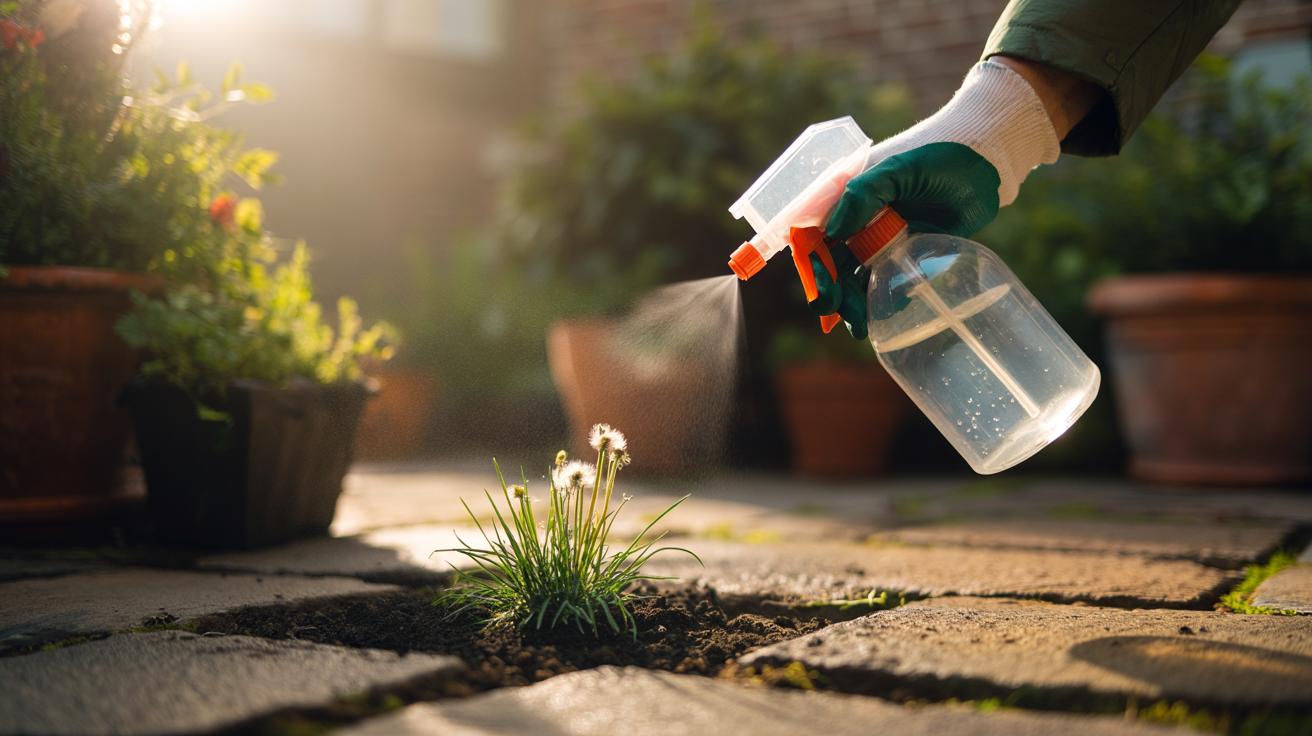
Protection is about precision. Work on still mornings; keep the nozzle close; use a coarse droplet to prevent mist drift. For mixed borders, fit a DIY shield—an old milk carton or a cut-down pop bottle—around the nozzle to create a mini spray hood. On crowded beds, ditch the sprayer and paint leaves with a sponge or brush. It’s slow, yes. It’s also surgical. Water your ornamentals lightly beforehand so any stray splash dilutes instantly on their foliage. If you can’t guarantee the aim, don’t pull the trigger—dab instead.
Surface matters. On patios, pathways, and gravel, vinegar shines because runoff won’t reach roots you care about. In veg plots, focus on inter-row spaces and keep spray away from crop stems. After treatment, leave leaves intact for a day so sunlight and heat finish the job, then remove the dead matter to deny shade to new germination. Follow up with mulch—compost, leaf mould, or wood chips—to suppress the next wave. A planned routine of spot-spraying, mulching, and quick hand-hoeing turns vinegar from a gimmick into a sustainable strategy.
Limits, Caveats, and Smart Combinations
Vinegar doesn’t do everything. It won’t kill deep taproots outright. Brambles and bindweed will laugh, then reshoot. That’s not failure; it’s a cue to switch tactics. Combine vinegar for quick top scorch with root extraction using a fork, or deplete perennials by repeated cuts. Thermal weeding, flame guns on hard surfaces, and sharp stirrup hoes between rows are excellent teammates. Avoid blanket spraying lawns or groundcover—vinegar is non-selective and will brown anything it touches. Always wear eye protection and gloves, especially with strengths above 5%.
On soil health, acetic acid is short-lived and largely neutralised, but don’t oversaturate beds. Keep applications targeted and infrequent. Store vinegar securely and label any decanted mix clearly. If you’re in a sensitive wildlife area, concentrate usage to paths and edges to minimise incidental impact on non-target plants. And remember: the best weed control is cultural. Dense planting, timely mulching, and quick intervention at the seedling stage reduce reliance on any spray. Use vinegar where it excels—fast, precise knockdown—then let plant cover and soil care do the rest.
Used with purpose, vinegar turns from a blunt kitchen staple into a sharp, selective tool. It destroys weeds by contact, then quickly disappears into the garden’s chemistry, leaving roots you want unharmed—provided your technique is tight. The payoff is clear beds, cleaner hardstanding, and fewer synthetic products in the shed. Be precise, protect foliage you value, and repeat lightly rather than drenching. With a shield, a steady hand, and an eye on timing, the balance tips in your favour. How will you adapt these methods to your own borders, beds, and pathways this season?
Did you like it?4.6/5 (25)