In a nutshell
- 🌱 Epsom salt (magnesium sulphate) targets magnesium deficiency, reviving chlorotic, tired plants fast—sometimes overnight—without replacing compost or full fertilisers.
- 🚿 Apply safely: foliar spray at 1 tbsp per 4.5 L for quick uptake; soil drench at 1–2 tbsp per 4.5 L to the root zone at dusk; reassess if no change after two light treatments.
- 🌹 Best for tomatoes, peppers, roses, and leafy crops under load; boosts colour and photosynthesis, but adds no NPK and can antagonise calcium/potassium on alkaline or Mg-rich soils.
- ⚠️ Myths and risks: it won’t cure blossom-end rot or slugs; overuse raises salinity, causes tip burn (especially in containers), and wastes nutrients—flush pots if buildup appears.
- 🧪 Strategy first: run periodic soil tests, start small, observe, and pair modest magnesium corrections with compost and mulch to rebuild living soil for lasting resilience.
Is your border tired, your veg beds sluggish, your pots sulking despite regular watering? One humble pantry staple, Epsom salt, has long been a gardener’s quiet ace, reviving lacklustre growth when soils run short of key minerals. It won’t replace compost or a complete fertiliser, yet its targeted hit of magnesium and sulphur can jolt chlorotic leaves into action and steady stressed roots fast. Think triage, not miracle. In clear deficiency, response can be swift. Sometimes by morning. Sometimes over a week. The trick is knowing when and how to use it, and when to hold back. Here’s the UK-savvy guide you can act on tonight.
What Epsom Salt Is and Why Soil Dies
Epsom salt is magnesium sulphate heptahydrate, named after the Surrey spa town that made it famous. Magnesium sits at the heart of chlorophyll molecules, so when plants lack it, leaves pale between the veins, growth slows, and fruit quality suffers. Sulphur supports protein formation and enzyme activity. Together, these ions power photosynthesis and flavour. Dead soil, by contrast, is not just dry or compacted. It’s a system missing structure, biology, and balance, often starved of organic matter and sometimes skewed in its mineral ratios.
Here’s the crucial distinction: Epsom salt feeds a specific need; it doesn’t rebuild soil like compost or leaf mould. If your plot shows classic signs of magnesium deficiency—interveinal yellowing on older leaves of tomatoes, peppers, roses, brassicas—magnesium sulphate can help quickly. In container mixes and sandy beds, soluble nutrients wash through, so deficiency bites faster and the response to a careful drench can be dramatic. Always test or at least observe before you dose—guesswork with minerals risks long-term imbalance. And remember, heavy clays rich in magnesium rarely need more of it.
Overnight Fix: How to Apply Safely
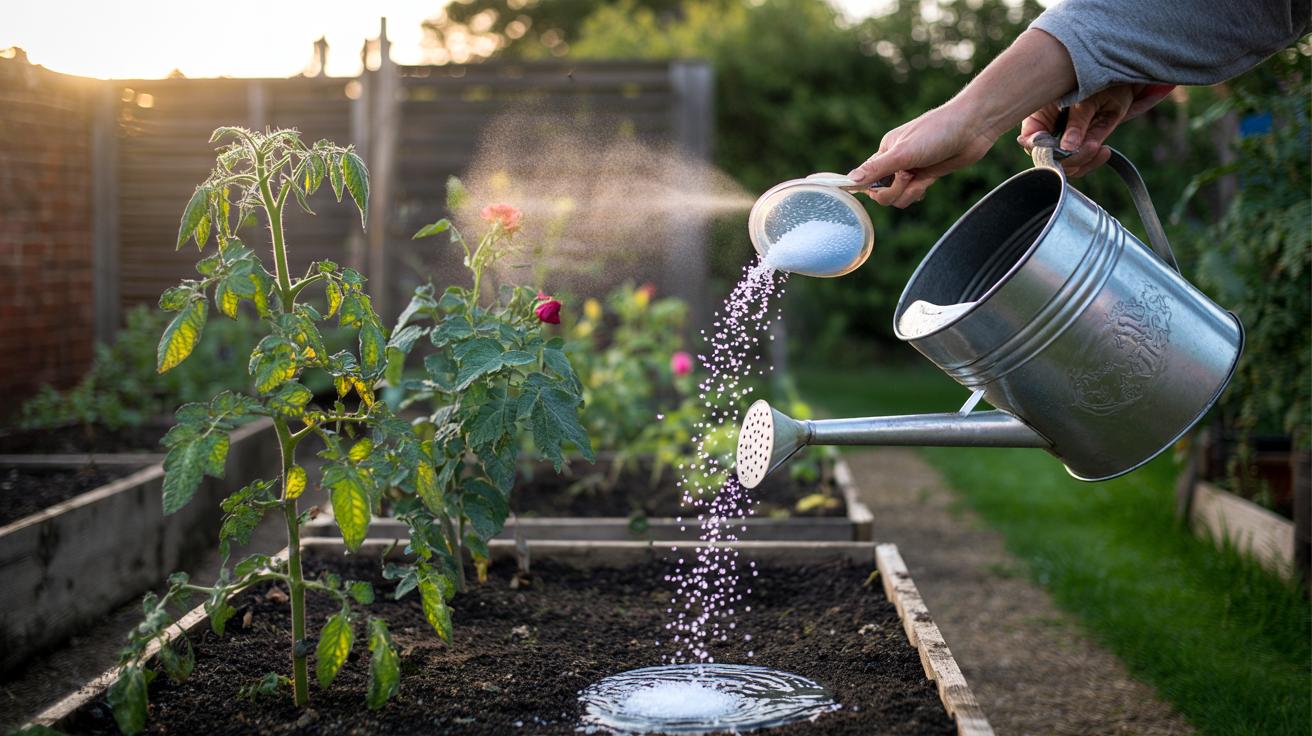
Fast action depends on delivery. A foliar spray gets magnesium straight into leaves, which can perk up overnight when deficiency is acute. Mix 1 tablespoon (about 15 g) of Epsom salt per 4.5 litres (1 UK gallon) of water and mist until leaves glisten, early morning or at dusk. For soil drenches, dissolve 1–2 tablespoons per 4.5 litres and water the root zone thoroughly. Keep it simple. Keep it light. The goal is correction, not saturation. Avoid hot, bright midday applications that scorch foliage or accelerate evaporation, and never combine with other salts in the same spray unless you’ve trialled it on a single plant first.
| Use Case | Dilution | Amount per Plant/Area | Timing |
|---|---|---|---|
| Foliar rescue (tomatoes, peppers, roses) | 1 tbsp per 4.5 L water | Light mist to leaf sheen | Dawn or dusk, repeat in 10–14 days if needed |
| Soil drench (containers, sandy beds) | 1–2 tbsp per 4.5 L water | 0.5–1 L per medium plant | Evening; water in lightly afterwards |
| Bed prep (proven Mg deficiency) | Dry scatter, then water | 20–30 g per m² | Early spring or after harvest |
Expect subtle colour shifts first, then improved vigour. If nothing changes after two light treatments, stop and reassess. You may be facing compacted soil, root damage, or a different nutrient issue entirely. Less is safer than more with soluble salts, particularly in pots where runoff can’t disperse excess. Keep pets away from freshly treated areas until foliage dries.
Crops That Love Magnesium: Benefits and Limits
Some plants broadcast their needs. Tomatoes and peppers crave magnesium during heavy fruiting; sprays can deepen green leaf colour and sustain photosynthesis under load. Roses respond with richer foliage and steadier blooming. Brassicas and leafy greens may regain their confident, dark leaves after a mid-season drench. In lawns, light magnesium inputs refine colour without the surge you get from nitrogen. These are real wins, and they add up across a season.
Yet there are firm limits. Epsom salt supplies no NPK—no nitrogen, phosphorus, or potassium. It doesn’t fix poor tilth, low organic matter, or chronic compaction. On alkaline soils, magnesium becomes more available, so adding more can tip the balance against calcium and potassium, crowding out other ions at root uptake sites. In high-magnesium clays, extra Epsom salt can tighten structure and worsen drainage. That’s a step backwards. Blend strategy: feed magnesium sparingly, mulch generously, and use compost to rebuild life. Think of Epsom salt as a surgeon’s scalpel, not a spade. And rotate—magnesium needs fluctuate with weather, watering, and crop load, so what works in July may be needless in September.
Myths, Risks, and When to Avoid
The internet brims with Epsom salt lore. Let’s sort it. It does not cure blossom-end rot in tomatoes—that’s a calcium supply and watering consistency problem. It won’t exterminate slugs or overhaul soil biology. And it isn’t a cure-all for yellow leaves, which can signal nitrogen shortage, waterlogging, pests, or cold nights. The risk of overuse is simple but serious: raised salinity, nutrient antagonism, and runoff that wastes money and stresses waterways. In containers, salt build-up shows as leaf tip burn and a crust on compost. Flush with plain water if you overdo it.
When should you avoid it? If your soil test shows high magnesium. If your bed is heavy, sticky, and slow to drain. If leaves are already deep green and vigorous. And if you haven’t ruled out other problems—especially poor watering routines in heat, which mimic deficiency. The smartest step is a basic soil test every couple of years; it pays for itself by preventing guesswork. Where magnesium is low, Epsom salt is cheap, precise, and fast. Where it isn’t, it’s a distraction. Let evidence lead, not habit or hearsay.
Reviving tired plots is a journey, not a single sprinkle. Used with intent, Epsom salt can flip a magnesium-starved planting from wan to lively in a night or two, while compost, mulch, and wise watering secure the long game. Start small, observe closely, keep notes, and adjust. Your garden will tell you what worked. Your harvest will confirm it. With a scoop of science and a pinch of patience, your soil can wake up again—healthier and more resilient than before. Which plant in your patch is first in line for a careful magnesium tune-up, and how will you measure the difference?
Did you like it?4.4/5 (23)