In a nutshell
- 🍌 Banana peels accelerate composting thanks to quick-burning carbohydrates, high moisture, and nutrients like potassium, phosphorus, and calcium that turbocharge microbial activity.
- ⚙️ Use smart methods: chop and mix into the hot core, make a blended slurry for fastest results, freeze-then-crush for easy breakdown, trench-bury for discretion, or add sparingly to a worm bin.
- ⚖️ Keep balance right: pair peels (as greens) with equal volumes of browns like shredded cardboard or dry leaves, maintain sponge-like moisture, and turn regularly to keep compost aerobic.
- 🚫 Avoid pitfalls: prevent matting, odours, and fruit flies by burying peels 10–15 cm deep, capping with browns, removing stickers, and securing bins against pests.
- 🌿 Put results to work: use peel-enriched compost as mulch, mix 20–30% into potting blends, and support flowering and fruiting crops—skip weak “banana peel tea” and trust slow microbial release.
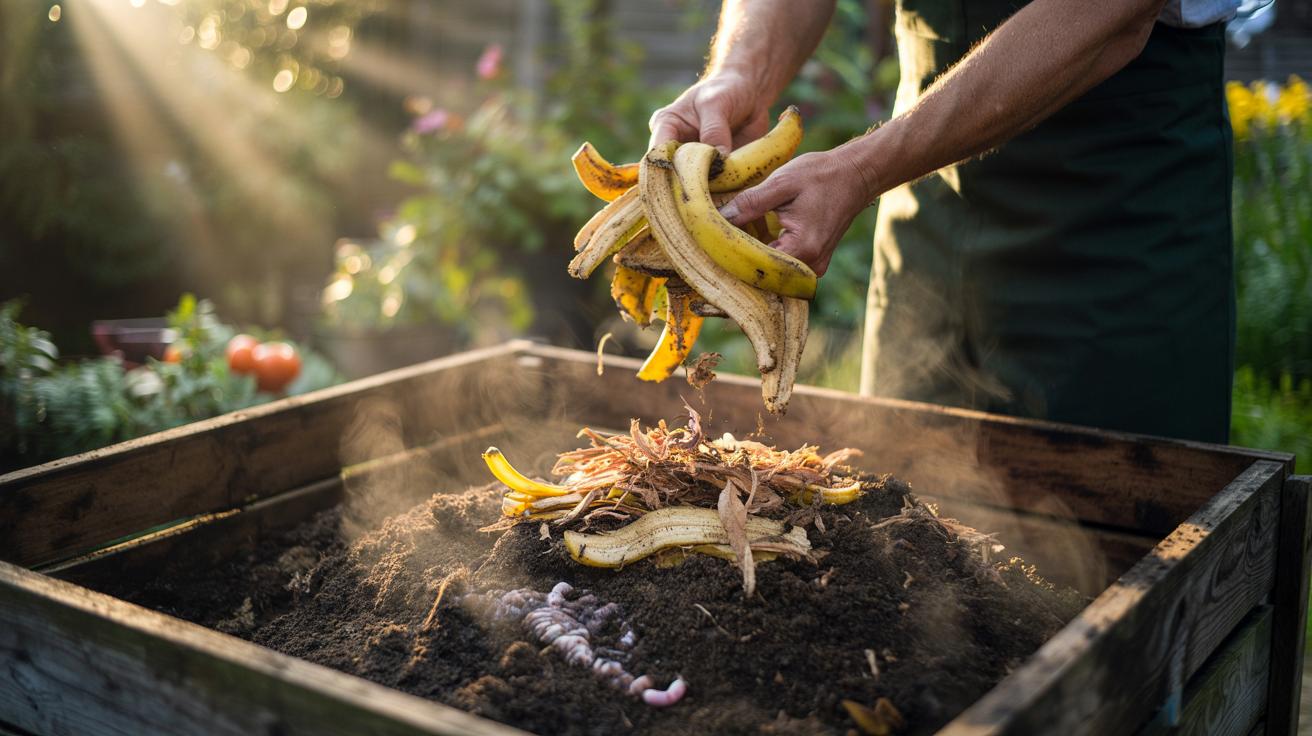
Compost piles love a little help, and your fruit bowl holds a secret accelerator hiding in plain sight. Banana peels carry quick-burning energy for microbes, abundant moisture, and a suite of nutrients that keep a heap humming. Chop them, blend them, or bury them whole: each approach nudges nature’s engine a little faster. This simple kitchen scrap can speed up decomposition when used correctly. For households aiming to cut waste and enrich soil, peels are a low-effort win. They vanish quickly, reduce odours when managed well, and pay back in rich, dark compost that feeds gardens, pots and allotments alike.
Why Banana Peels Accelerate Composting
Speed in a compost heap depends on what you feed it. Banana peels are soft, thin and crammed with readily available carbohydrates, so bacteria and fungi latch on fast. Their high moisture helps maintain microbial activity, keeping the core warm and active. The peel’s tissue breaks apart easily, increasing contact with microbes and oxygen, which is crucial for hot, aerobic breakdown. There’s also the nutrient angle: peels bring potassium, phosphorus, calcium and magnesium that support both microbial metabolism and, later, plant health. In short, they’re like a starter snack for the heap. Add peels right and you’ll feel the pile heat up sooner.
Balance matters. Peels count as “greens” due to their moisture and readily degradable compounds. Pair them with “browns”—shredded cardboard, straw, dried leaves—to prevent sogginess and smells. Chop peels to finger-width strips to boost surface area. Mix, don’t layer. And keep air flowing; turning the heap stops peels matting into a slimy slab, maintaining the aerobic conditions that make composting swift, clean and effective.
Smart Ways to Add Banana Peels to Your Heap
You’ve got options. For a quick boost, chop peels into small pieces and scatter them through the middle of the heap, where temperatures peak. Want a turbo-charge? Blend peels with a splash of water into a slurry and pour it into fresh layers; microbes love the thin films around fibres. Time-poor? Freeze, then crush the peels; ice crystals rupture cells and speed things once thawed. For discreet composting, trench them 15–20 cm deep in beds so soil life does the rest. Wormery owner? Banana peels are a favourite in a worm bin, but add sparingly to avoid a sticky mass. Whatever the method, match peels with absorbent browns to keep balance.
As a rule of thumb, alternate handfuls of peels with equal volumes of shredded paper or leaf litter. Keep pieces moist like a wrung-out sponge, not dripping. If you’re experimenting with bokashi pre-fermentation, peels break down especially fast in a subsequent heap thanks to partially pickled tissues.
| Method | How to Do It | Speed Effect | Top Tip |
|---|---|---|---|
| Chopped | Slice and mix into hot centre | Fast | Add equal volume of browns |
| Blended Slurry | Blend with water; pour into layers | Very fast | Turn after 24–48 hours |
| Frozen then Crushed | Freeze, thaw, crumble into heap | Fast | Good for batch processing |
| Trench Composting | Bury 15–20 cm deep in soil | Moderate | Keep 10 cm from roots |
| Worm Bin | Small amounts, well mixed | Fast | Cover to deter flies |
Common Pitfalls and How to Avoid Them
Too many peels at once can go south quickly. They mat, turn slick and exclude air, inviting anaerobic odours and fruit flies. Fix that by layering: for every handful of peels, add shredded cardboard or dry leaves. Turn the heap before smells appear. If flies persist, bury peels at least 10–15 cm into the heap’s core and cap with browns. Never leave peels exposed on top; it’s an open invitation to pests.
Watch for contamination. Remove stickers and the stringy adhesive—they don’t decompose. Rinse peels if heavily handled, and if you’re concerned about residues, prioritise organic bananas or bury peels deeper in soil-based systems. Pets and foxes are curious; a tight-fitting lid or fine mesh over a dalek bin keeps raiders out. Finally, moisture management: if the heap drips, add dry browns; if it’s dusty and slow, add chopped peels or other greens and a light sprinkle of water. Keep oxygen moving with a regular turn, and the system will right itself.
From Bin to Bed: Using Peel-Enriched Compost
Done right, peel-powered compost is dark, friable and smells woody-earthy. That potassium-rich profile supports flowering and fruiting crops—tomatoes, courgettes, roses—by improving resilience and bloom quality. But don’t treat compost like a single-source fertiliser; it’s a broad-spectrum soil builder. Spread 2–3 cm as mulch in spring, or mix 20–30% into potting blends for containers. Work it into topsoil for beds, then water well to activate soil life. Keep compost a few centimetres away from woody stems to avoid rot.
Ignore the myths. “Banana peel tea” is tidy but weak; most nutrients are released through microbial breakdown over weeks, not a quick soak. If you want a speed boost for seedlings or a tired bed, lean on the biology: add finished compost, keep soil covered, and let earthworms shuttle the goodness down. The result is steadier nutrition, better structure and moisture retention, and fewer boom–bust feeding cycles.
Banana peels won’t transform a badly built heap on their own, yet they are an elegant accelerator when the basics are right: air, moisture, balance and volume. Use them as regular, modest additions rather than occasional dumps. Blend or chop for speed, bury for discretion, match with browns for control. It’s a small habit with a striking payoff in both soil health and waste reduction. How will you fold this quick win into your composting routine, and which method are you keen to trial first?
Did you like it?4.6/5 (28)