In a nutshell
- 🧪 The science: starch retrogradation makes bread feel stale; brief heat plus moisture loosens crystals, re-softening the crumb and restoring aroma—temporarily.
- 🧻 Method: use a damp paper towel around slices or rolls, microwave in short bursts, then crisp in a hot toaster/oven; never put paper towel in the oven.
- 🥖 Best candidates: crusty loaves (baguette, sourdough), rolls, and flatbreads revive well; enriched breads need gentle heat; if there’s mould, discard.
- 🔥 Alternatives: water spritz + oven for whole loaves, or pan steam then dry for flatbreads; follow the article’s times and temperatures for reliable results.
- 🧊 Storage wins: avoid the fridge, use a bread bin or paper bag, slice-and-freeze for later, and adopt the soften-then-crisp routine to cut waste.
Left with a loaf that’s lost its lustre? Don’t bin it yet. A simple, almost cheeky trick can coax life back into bread that feels past its best. A damp paper towel and a short burst of heat can soften the crumb and perk up the crust, restoring aroma and bite in minutes. It sounds implausible, yet it’s rooted in kitchen science rather than wishful thinking. You’re not masking staleness; you’re reversing it—temporarily, but effectively. Here’s how the method works, when to use it, and how to avoid the soggy pitfalls that turn good intentions into chewiness.
The Science of Staling and How Heat Reverses It
Bread doesn’t go stale because it “dries out” alone. The main culprit is starch retrogradation: after baking, gelatinised starch molecules slowly recrystallise, pushing water away from the crumb. That’s why yesterday’s loaf tastes firm, dull, and oddly leathery. Staleness isn’t the same as dryness—it’s a structural change in starch. Temperature accelerates or slows this shift; refrigeration is notoriously unkind to bread, turbocharging retrogradation.
Introduce gentle heat and a whisper of moisture, and the crystalline chains loosen. The crumb softens as water migrates back into starch, creating the supple texture you remember from the bakery shelf. The crust is a different beast. It needs controlled rehydration and then re-drying to regain its snap. Hence the two-stage strategy many bakers swear by: soften first, then crisp.
It’s important to distinguish staling from spoilage. Mould is a hard stop. If you see fuzz or smell mustiness, bin it. But if the loaf is simply firm and lacklustre, heat and moisture can work wonders. Think of it as a reset—brief but brilliant.
Step-by-Step: The Damp Paper Towel Method
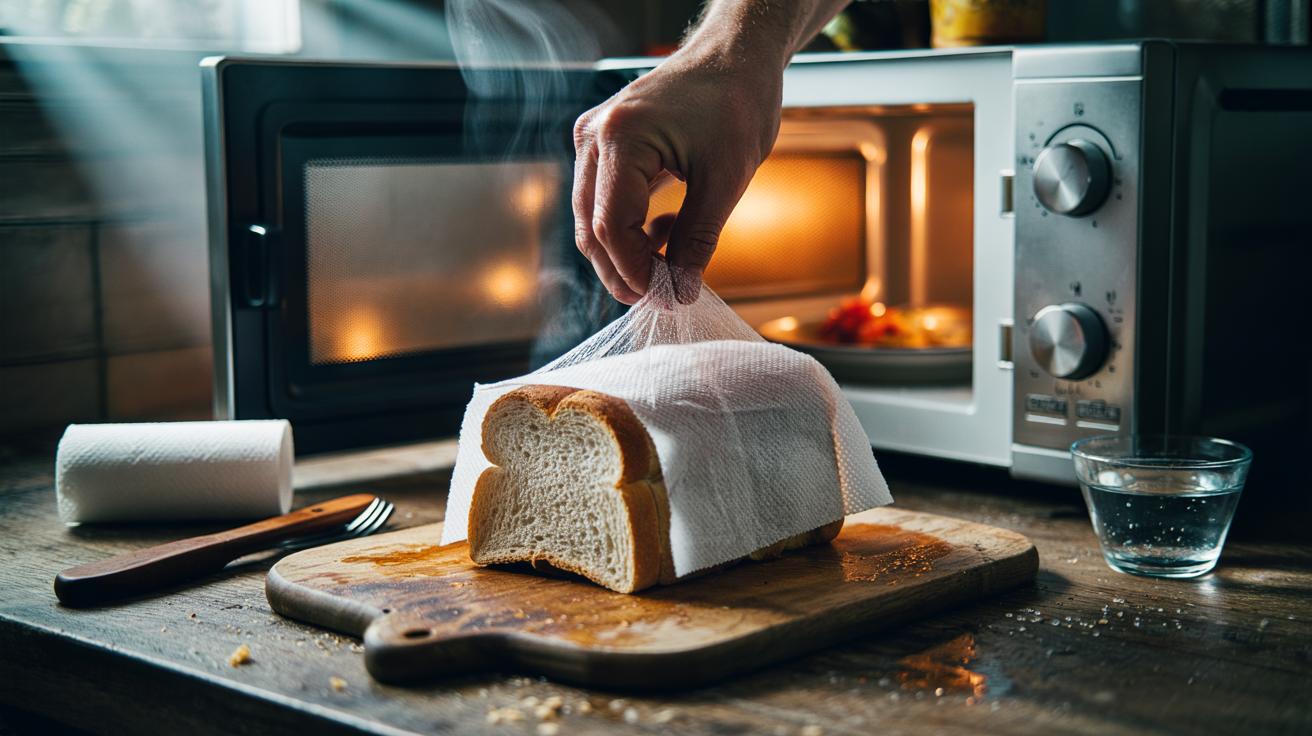
For speed and reliability, the microwave is your ally. Lightly wet a sheet of kitchen paper, then wring it until it’s barely damp—no drips. Wrap it loosely around a slice or a roll, ensuring some airflow. Microwave at medium power (600–800W) for 10–20 seconds, then check. Repeat in 5-second bursts until the crumb feels springy. Unwrap at once. To revive the crust, finish in a hot toaster or a 200°C oven for 2–3 minutes. Never put paper towel in an oven; it can scorch or ignite.
If you’re reviving a baguette or a small loaf, skip the microwave and give the crust a quick spritz under the tap. Bake directly on a rack at 180–200°C until the crust crackles again. The internal steam reconditions the crumb while the dry heat restores crunch. A heavy frying pan with a lid also works for flatbreads: a splash of water, gentle heat, lid on for steam, lid off to crisp.
| Method | Moisture Source | Time | Temp/Power | Best For |
|---|---|---|---|---|
| Microwave + Damp Paper Towel | Kitchen paper, barely damp | 10–30 sec | 600–800W | Slices, rolls; quick fix |
| Oven + Water Spritz | Light spray or rinse | 5–12 min | 180–200°C | Baguettes, small loaves |
| Pan + Steam, Then Dry | Tiny splash, lid on/off | 2–4 min | Low–medium hob | Flatbreads, pittas |
Avoid oversteaming; too much water turns bread gummy. You want a brief, targeted rehydrate, then a fast dry-out for snap.
Which Breads Benefit, and Which Do Not
Not all loaves are created equal in the battle against staling. Crusty breads—baguettes, boules, sourdoughs—respond beautifully to the moist-then-dry cycle. Their open crumb and robust crust allow steam to move freely, softening inside while the exterior crisps back up. Rolls behave similarly. Slices from a standard tin loaf also perk up with the damp paper towel method, though they can veer soft very quickly, so use shorter bursts and finish in a toaster.
Enriched breads—brioche, challah, milk loaves—contain butter, eggs, or sugar. They stale more slowly but can become bouncy and greasy if overheated. Treat them gently: minimal moisture, ultra-brief heating, then a rest. If a bread is very sweet or laminated, skip heavy steaming to protect the crumb structure.
Very thin flatbreads, wraps, and pittas love a steam-kiss on the hob or in the microwave; they regain pliability instantly. Crackers and crispbreads are a different category entirely—once they soften, they need dry heat only to restore crunch. And if there’s visible mould or a suspicious odour, don’t gamble. Safety trumps thrift.
Smart Storage to Keep Bread Fresher for Longer
The best rescue is prevention. Let fresh bread cool completely before storing; residual warmth traps moisture and invites a leathery crust. Use a bread bin or a paper bag to balance airflow and humidity. Avoid sealed plastic unless you’re freezing, as it softens the crust and encourages surface condensation. The fridge is a known enemy of bread texture, accelerating staling even as it slows mould.
For households that nibble slowly, slice the loaf on day one, then freeze portions in airtight bags. Toast slices straight from frozen or revive rolls in the oven; the freezer effectively pauses retrogradation. Keep a clean tea towel handy for oven refreshes, and reserve the damp paper towel for microwave quick fixes. Adopt a “soften then crisp” mindset: a brief rehydrate, followed by heat to dry the surface, will consistently deliver a bakery-fresh illusion without waste.
Handled with care, yesterday’s bread can be today’s hero. The damp paper towel method harnesses simple physics to rewind texture just long enough for breakfast or supper, turning disappointment into satisfaction. Pair it with thoughtful storage and a freezer habit and you’ll cut waste, save money, and eat better bread every day. Will you try the soft-then-crisp routine tonight—and which loaf will you revive first?
Did you like it?4.5/5 (24)